This beloved hymn reminds us that we can trust in our salvation if we believe in Christ and turn away from sin.
Major Daniel W. Whittle fought in the Civil War and was wounded at Vicksburg. After the war he went to work for the Elgin Clock Company in Chicago. Dwight L. Moody was also located in Chicago and he persuaded Whittle to enter into evangelism work. Whittle wrote most of his hymns using the pen name “El Nathan.” He wrote approximately 200 hymns and two of his most famous are “Showers of Blessings” and “I Know Whom I Have Believed.” The refrain to the latter hymn is as follows.
“But I know whom I have believed
And am persuaded that he is able
To keep that which I’ve committed
Unto him against that day”
The key word in Whittle’s hymn is the key word for all of us . . . Believed. This word (believe) occurs 289 times in the entire Bible and 84 times in the gospel of John alone.
When Jesus began His ministry he said these critical words as recorded by Mark 1:15. “The kingdom of God has come near. Repent and believe the good news.” Jesus tells us to turn from our worldly sinful ways to a new life with Him. To do that, we must believe in Him. This is the key to the Christian life . . . belief . . . which is faith!
Let’s look at a few examples.
In Deuteronomy chapter 1 (Numbers 14 also), the people of Israel refused to believe God and take the land He had given them after He led them out of Egypt. In spite of all He did delivering them from the Pharaoh and leading them through the wilderness to the promised land, they still did not believe Him . . . they did not trust God. So, only Caleb and Joshua were allowed to enter the Promised Land . . . not even Moses. Before this occasion, Moses himself had a hard time believing God and trusting Him (see Exodus chapter 4).
As we discussed earlier, believe occurs 84 times in the gospel of John. The famous exchange between Jesus and Thomas (one of the 12 apostles) is recorded in chapter 20 of John. Thomas had been told by the others that Jesus had risen from the dead and they had seen Him. But, Thomas did not believe them. He would not believe until he could touch Jesus’ scars and nail pierced hands. Jesus appeared for the second time to His disciples in a locked room. He told Thomas to touch His hands and His side which had been pierced by a spear. Thomas saw Jesus and touched His hands and side and exclaimed, “My Lord and my God.” Jesus responded with these words for all of us.
“Because you have seen me, you have believed;
Blessed are those who have not seen and yet have believed.”
Time and time again Jesus explained to his disciples why He came, how He would die, and why He must suffer. But, they just could not believe it. They wanted and expected a king to rule over them as David did. They wanted a king to lift the nation of Israel out from under the persecution and rule of Rome. They could not believe or understand why their “king” must suffer and die such a shameful death.
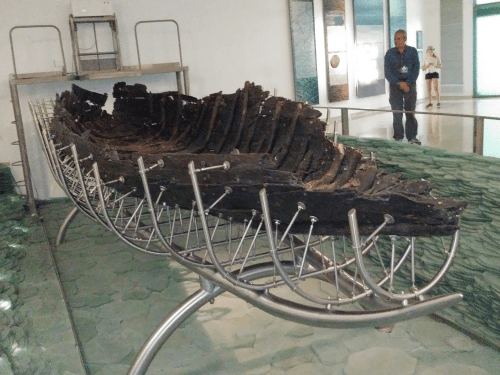
Even after the resurrection and His appearance to them, they still doubted. Peter and the other fishermen decided to go back to what was familiar to them…they went back to fishing as recorded in John chapter 21. But, Jesus appeared to them and asked them if they had caught any fish. They had not. He directed them to fish on the other side of the boat and their nets were completely full. They came ashore and realized it was Him. He fed them breakfast and restored them beginning with Peter.
During this time He gave them their commission and empowered them with the Holy Spirit (John 20). This mighty combination of His resurrection and the Holy Spirit removed all doubt and enabled them to give their lives in spreading the gospel.
Now let’s look at the consequences of belief and unbelief.
Looking at belief first, we need go no further than John 3:16; “For God so loved the world that he gave his one and only Son, that whoever believes in him shall not perish but have eternal life.” This is a fundamental pillar of the Christian faith and a great promise from God to us all.
If we believe in Jesus we
1 – will not perish, and
2 – will have eternal life.
But this kind of belief is more than just an intellectual belief. It requires that we trust Jesus as our savior and therefore He becomes Lord in our life. He receives our first priority. We defer to Him and His teachings rather than our own desires. There is a never ending variety of worldly things which we are tempted to trust as most important. But if we believe in Jesus, He takes the place of those worldly things and we “only trust Him.”
“If you believe, you will receive whatever you ask for in prayer.”
Matthew 21:22
Very truly I tell you, whoever hears my word and believes him who sent me has eternal life and will not be judged but has crossed over from death to life.
John 5:12
I am the resurrection and the life. The one who believes in me will live, even though they die.
John 11: 25
All the prophets testify about him that everyone who believes in him receives forgiveness of sins through his name.
Acts 10:43
Similarly, we find this in Acts 13:22:
“Through him everyone who believes is set free from every sin, a justification you were not able to obtain under the law of Moses.”
Throughout the New Testament we find this theme repeated over and over again . . . belief in Jesus is the key to forgiveness of sins and eternal life. There are many accounts of people with great faith (belief) throughout the Bible. From the Old Testament, we remember the great faith of Abraham regarding the sacrifice of Isaac (Genesis 22). In the New Testament we find that very comprehensive chapter on faith in Hebrews (11).
In Mark Chapter 7 we find one of the lesser known but very instructive teachings of Jesus regarding faith (belief). The account is of a Gentile woman who has a very young demon possessed daughter. The mother no doubt has tried all the pagan and worldly approaches for healing of her daughter. She learns of Jesus and believes in Him and in His power to heal her daughter.
She repeatedly asks (begs) Jesus for help. For a while, Jesus does not respond. But He then uses an analogy regarding giving food to answer her. He even uses the word “dog” in telling her that the time for the Gentiles to be brought into the kingdom has not yet come. But, the mother is not offended and she persisted in her faith. Based on what Jesus called her “great faith” He healed her daughter of the demon. This kind of faith (belief) is powerful and is the key to life in Christ. Jesus used this encounter with the Syrophoenician woman to demonstrate genuine saving faith (belief in Him).
But, what do we think about unbelief? Let’s look at a few passages.
John 3:36 is very clear on unbelief as follows.
“Whoever believes in the Son has eternal life, but whoever rejects the Son will not see life, for God’s wrath remains on them.”
In that same chapter John recorded Jesus’ words as follows.
“Whoever believes in him is not condemned, but whoever does not believe stands condemned already because they have not believed in the name of God’s one and only Son.”
Jesus continues this theme in John chapter 8 verse 24 as follows.
“I told you that you would die in your sins; if you do not believe that I am he, you will indeed die in your sins.”
In Hebrews chapter 9 verses 27 and 28 indicate that we all will be judged after we die.
“Just as people are destined to die once, and after that to face judgment, so Christ was sacrificed once to take away the sins of many; and he will appear a second time, not to bear sin, but to bring salvation to those who are waiting for him.”
And in that same book we find the following: “It is a dreadful thing to fall into the hands of the living God.” If we are stuck in our unbelief, our judgment will be “dreadful”!
The Old Testament begins with the story of Adam and Eve and their unbelief regarding the forbidden tree. The consequences of that unbelief were and still are enormous. Moses’ unbelief kept him from seeing the Promised Land. The unbelief of the people during the time of Noah resulted in the flood and God wiping out the inhabitants of the earth and starting over again. Unbelief is serious business!
Finally, it is interesting to note that Jesus was amazed on two occasions in the New Testament. He was amazed at the belief (faith) of the centurion whose servant he healed (Matthew 8). He was also amazed at the unbelief (lack of faith) of those in His hometown (Mark 6). So, what do we do and how can we help others with this all important issue of belief?
We must heed the teachings of Paul in Romans and 2 Corinthians regarding the origin of faith. In Romans chapter 10 we find the following.
“Consequently, faith comes from hearing the message, and the message is heard through the word about Christ.”
In 2 Corinthians chapter 4 verse 6 indicates the work of God in the establishment of our faith.
“For God, who said, ‘Let light shine out of darkness,’ made his light shine in our hearts to give us the light of the knowledge of God’s glory displayed in the face of Christ.”
Combining these two teachings we see a dual action. We need God to open our eyes to the truth of the gospel and His word and we must pursue His word through teaching and study. Closely connected to Paul’s teachings is the following purpose statement regarding John’s writing (John 20:31 – 32).
“Jesus performed many other signs in the presence of his disciples, which are not recorded in this book. 31 But these are written that you may believe that Jesus is the Messiah, the Son of God, and that by believing you may have life in his name.”
So, if I am working on my own faith or witnessing to another regarding belief in Jesus, we should all pray for God to open our (their) eyes. And, let us engage in a serious study of God’s word beginning with the gospel of John.
Now, there are two final important truths to keep in mind. First, Paul reminds us that we (he) can plant the seed, another (Apollos) can water it. . . but, God makes it grow! Second, Paul instructs Timothy (and us) with the following verses from 2 Timothy 2:24 – 26.
And the Lord’s servant must not be quarrelsome but must be kind to everyone, able to teach, not resentful. Opponents must be gently instructed, in the hope that God will grant them repentance leading them to a knowledge of the truth, and that they will come to their senses and escape from the trap of the devil, who has taken them captive to do his will.
If we know whom we have believed, we will trust Him and follow Him. If we are not sure, then let us make every effort to grow our belief (faith) through prayer, the study of, and the hearing of . . . God’s word.
— H. Carter
 Hymns for Him