The hymn “In Christ Alone” was the first song Keith Getty and Stuart Townend wrote together. Copyrighted in 2001, this worship hymn has received an incredible response. Keith wrote the music and Stuart penned the words.
Although the hymn is relatively new, the words present time-honored biblical truths especially about salvation. The theology underlying this hymn dates back to the days of the Reformation in the 16th century. The title is a phrase which comes directly from the Reformation and the religious leaders of that movement . . . including Martin Luther and John Calvin. They refocused Christianity on the basic teachings of Jesus especially relating to salvation.
One of the products of this movement was the five solas as given below.
Sola Gratia Saved by Grace Alone
Sola Fide Through Faith Alone
Solus Christus In Christ Alone
Sola Scriptura Scripture alone is our highest authority
Soli Deo Gloria To the Glory of God Alone
The focus of this meditation is on the phrase “In Christ Alone” which is the title of the hymn and one of the five solas. To begin this meditation, let’s ask the question, Why not? Why am I not in Christ alone? There are many possible answers to that question, but I would like us to look at the discussion between Jesus and the Jewish leaders as recorded by John in Chapter 8 of his gospel for assistance.
John gives three reasons that the Jews and the religious leaders of that time were not “in Christ Alone.” These reasons are just as applicable today as they were then.
First, I am not in Christ if I think I can do it myself.
If I am self-righteous, I believe that I can do, or have done, what it takes to be right with God. This approach can take many forms. I can believe that I don’t do anything wrong. I deny that I am a sinner. Or, I can use the comparison approach. If I compare my “minor” errors with the terrible sins of others, I conclude that I am certainly not “as bad” as those other people. Therefore, I will be going to heaven; they will not. This self-righteousness was a big problem for the Pharisees and Jewish leaders. Jesus condemned them for being self-righteous hypocrites in a number of instances recorded in the New Testament. One such significant passage is Matthew chapter 23. Specifically strong is His condemnation of them in verses 27 and 28 as follows.
Woe to you, teachers of the law and Pharisees, you hypocrites! You are like whitewashed tombs, which look beautiful on the outside but on the inside are full of the bones of the dead and everything unclean. 28 In the same way, on the outside you appear to people as righteous but on the inside you are full of hypocrisy and wickedness.
Matthew 23: 27-28
In John chapter 8 in the discussion with the Pharisees they criticize Jesus by stating in a self-righteous manner, “We are not illegitimate children” . . . referring to His being born “out of wedlock.” So, self-righteousness was and is a major cause of not being “in Christ alone.”
Second, Jesus tells the Pharisees they are “of this world” in verse 23. Being of this world keeps us from being in Christ.
If we are in love with the things of this world, they become idols to us. Then, we worship them as opposed to God . . . remember the first commandment. Even though these things can be “good” in and of themselves, they must not replace God as our number one priority. If we are enamored with worldly systems and ideologies, they take us away from the “things of heaven” that we should be thinking about (Colossians 3).
There are many places in the New Testament where we are warned about the things of this world, but let’s look in one of John’s letters. Specifically, we find this passage in 1 John 2:15-17.
Do not love the world or anything in the world. If anyone loves the world, love for the Father is not in them. 16 For everything in the world—the lust of the flesh, the lust of the eyes, and the pride of life—comes not from the Father but from the world. 17 The world and its desires pass away, but whoever does the will of God lives forever.
1 John 1: 15-17
In the last verse of this letter, John tells us to “keep ourselves from idols.” He is giving us a final reminder that the things of this world can take us away from being “in Christ alone.”
Third, Jesus tells the Pharisees and us, in no uncertain terms, that if we do not believe that He is who He claims to be, we will die in our sins.
This is very clear; it is inescapable; and it is extremely shocking. We must not miss this emphatic warning from Jesus. Some believed Him, but many did not. To those who did believe Him, He told them “if you hold to my teaching, you are really my disciples.” Jesus says we must believe that “I am the one I claim to be” . . . verse 28.
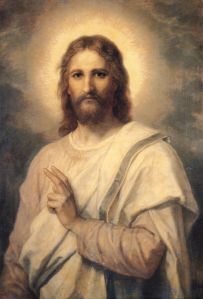
Jesus makes a number of claims about who He is. But for this meditation, let’s look at the claim that is most relevant to our salvation. Specifically, Jesus is the only way to reconciliation with God. He is the only way to heaven and eternal life.
Being a “good person” will not “earn” that status. Being a good person is important but it must come as a result of being “in Christ.” We are not “in Christ” because we are a good person. If we are saved, being a “good person” is the result . . . Ephesians 2:10.
Let’s look at a few verses which confirm this fundamental truth.
John 14:5-6
Thomas said to him, “Lord, we don’t know where you are going, so how can we know the way?” Jesus answered, “I am the way and the truth and the life. No one comes to the Father except through me.”
Acts 4:10-12
. . . then know this, you and all the people of Israel: It is by the name of Jesus Christ of Nazareth, whom you crucified but whom God raised from the dead, that this man stands before you healed. Jesus is “‘the stone you builders rejected, which has become the cornerstone.” Salvation is found in no one else, for there is no other name under heaven given to mankind by which we must be saved.
1 Thessalonians 5:9-10
For God did not appoint us to suffer wrath but to receive salvation through our Lord Jesus Christ. He died for us so that, whether we are awake or asleep, we may live together with him.
There are many more passages which confirm this basic truth. For example, Ephesians chapter 2, Galatians 2:15 – 21, Hebrews 7:25, Hebrews 5:7-10, and John 6:35-40 and verse 44.
This great hymn “In Christ Alone” emphasizes the fundamental truth that Christ alone is our salvation and in Him alone we have eternal life . . . there is no other way! Some of the phrases in the hymn which capture this truth are as follows.
“In Christ alone my hope is found”
“The wrath of God was satisfied”
“For every sin on Him was laid”
“Bought with the precious blood of Christ”
As we sing this great worship hymn and meditate on the lyrics, my hope is that all of us have the testimony that we are saved by grace alone, through faith alone, in Christ alone, according to the scripture alone, for the glory of God alone.
Prayer
O, God by your amazing grace grant me deliverance from self-righteousness. May your Holy Spirit keep me focused on the things above so that I do not worship the things of this world. Increase my faith O God that I might believe “In Christ Alone” for salvation and eternal life. Amen.
 Hymns for Him