This beautiful Christmas Carol not only gets us in the mood for Christmas. It also provides a thoughtful reflection of the life of Jesus Christ from his birth in a lowly stable to our savior and king.
King Henry VI founded King’s College Cambridge in 1441. His intention was that the college choir would provide music for the events and services there. The college governance document (1453) includes a specification regarding the choir. It was to consist of 10 secular chaplains, 6 “singing men”, and 16 choristers.
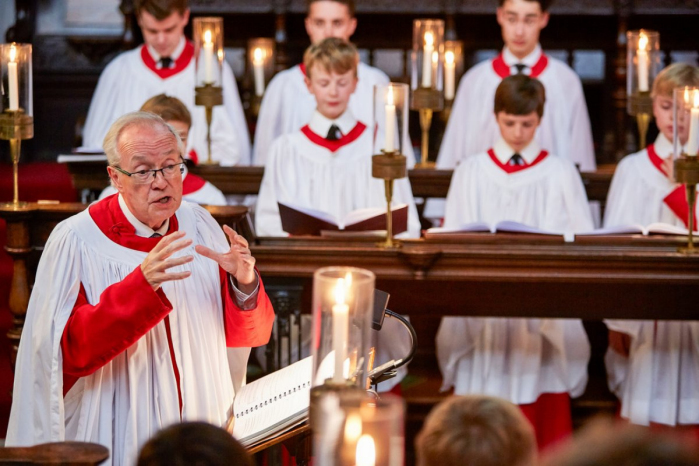
The boys (choristers) had to be under 12 years of age and able to read and sing. They were provided with meals, clothing and a small stipend for their board. Except for a few years in the 1550s and the 1650s the choir has been singing in services continuously for over 500 years. One of the Christmas traditions has become the singing of “Once in Royal David’s City.” The first verse is a solo by one of the choristers who is not told of his selection until just before the performance.
I became keenly aware of the choir and this tradition during the Christmas season of 2014. Our middle granddaughter at age 10 was selected by the choir director at their United Methodist church to lead the adult choir into the sanctuary for the Christmas program. As they processed, she sang solo the first verse of “Once in Royal David’s City.” She nailed it and we (the grandparents) were ecstatic!
While that experience was very significant for our family, it cannot compare to the message contained in this magnificent Christmas hymn. I know you will enjoy the 2013 version of this hymn sung by the King’s Choir and linked at the end of this meditation. But now let’s look at the significance of this all important biblical message.
About the composer
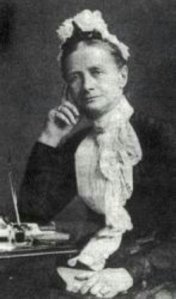
First, we note the history of the hymn. It was written by Cecil Frances Humphreys Alexander. She wrote poetry as a young girl and in 1850 married the Right Reverend W. Alexander.
She continued to write poetry and songs which totaled almost 400. One you probably recognize is “Jesus Calls Us O’er the Tumult.” However, most of her work was directed to children.
Photo source: Cecil Frances Humphreys Alexander (1818-1895) – Find A Grave Memorial
Lessons from the hymn
The lyrics for the hymn for our meditation are as follows.
Once in royal David’s city
stood a lowly cattle shed,
where a mother laid her baby
in a manger for his bed:
Mary was that mother mild,
Jesus Christ, her little child.
He came down to earth from heaven
who is God and Lord of all,
and his shelter was a stable,
and his cradle was a stall:
with the poor, and mean, and lowly,
lived on earth our Savior holy.
And thro’ all his wondrous childhood
he would honor and obey,
love and watch the lowly maiden
in whose gentle arms he lay:
Christian children all must be
mild, obedient, good as he.
And our eyes at last shall see him,
thro’ his own redeeming love;
for that child so dear and gentle
is our Lord in heav’n above:
and he leads his children on
to the place where he is gone.
Not in that poor lowly stable,
with the oxen standing by,
we shall see him, but in heaven,
set at God’s right hand on high;
when like stars his children crowned
all in white shall wait around.”
The 5 verses we just read clearly describe major stages in the life of Jesus.
A lowly birth
Verses 1 and 2 describe His humble beginning. He was born in a cattle shed and His mother used a manger for His bed. Mary was His mother but He was conceived by the Holy Spirit. Later on the leaders of Israel would criticize Him for being an illegitimate child (John 8:41). He came down from Heaven. He gave up His position in Heaven to live as a man on earth. As a man, He was without sin. . . He was holy (Hebrews 4:14 – 15). Paul describes this characteristic of Jesus in Philippians 2:5 – 7 as follows.
Have this mind among yourselves, which is yours in Christ Jesus, 6 who, though he was in the form of God, did not count equality with God a thing to be grasped, 7 but emptied himself, by taking the form of a servant, being born in the likeness of men.
Philippians 2: 5-7
Obedience and perfection
Verse 3 includes the idea that He was obedient. He was obedient both as a child to His parents and also as a man to His heavenly Father. Jesus describes His obedience in John 14:31: “But the world must learn that I love the Father and that I do exactly what my Father has commanded me.” In Hebrews we find two references to this notion of obedience. In chapter 2 we find the following: “It was fitting that God, from whom and through whom everything exists, should make the author of their salvation perfect through suffering.”
God made Jesus perfect, that is complete, through the suffering Jesus experienced on earth as a man and ultimately as our sacrifice. Later on in Hebrews chapter 5 we read the following:
Although He was a son, He learned obedience from what He suffered and, once made perfect, He became the source of eternal salvation for all who obey him.
Hebrews 5:8
So, although Jesus was/is the Son of God, He was made perfect (complete) through His suffering as the atonement for our sins. And, He is the source of our eternal salvation. . . by the grace of God through faith in Him alone!
Heavenly reunion
Verse 4 tells us of the greatest promise ever made. We will see Him in Heaven and He will lead us there! In John chapter 14, He promises us that He will return and take us to be with him in Heaven.
My Father’s house has many rooms; if that were not so, would I have told you that I am going there to prepare a place for you? And if I go and prepare a place for you, I will come back and take you to be with me that you also may be where I am.
John 14: 2-3
Verse 5 indicates that we will not see Him in the lowly stable but at the right hand of God in Heaven. There are several passages which confirm this. In the Old Testament Psalm 23 describes the way in which God and Jesus lead us. . . like a shepherd. We have the wonderful assurance of “I will dwell in the house of the Lord forever.”
Hebrews 12:1 – 3 is a perfect passage for this conclusion.
Therefore, since we are surrounded by such a great cloud of witnesses, let us throw off everything that hinders and the sin that so easily entangles. And let us run with perseverance the race marked out for us, fixing our eyes on Jesus, the pioneer and perfecter of faith. For the joy set before him he endured the cross, scorning its shame, and sat down at the right hand of the throne of God. Consider him who endured such opposition from sinners, so that you will not grow weary and lose heart.
Hebrews 12: 1-3
Paul reminds us that He endured the shame and suffering of the cross for the joy of leading His children to the place where He has gone. He now sits at the right hand of God. In the Apostles’ Creed, we confess that He sits at the right hand of God from whence He shall come to judge the quick and the dead.
As I contemplate this ultimate example of the suffering servant, I am reminded of the words of Paul in 1 Corinthians 1.
For the message of the cross is foolishness to those who are perishing, but to us who are being saved it is the power of God. 19
For it is written:
“I will destroy the wisdom of the wise;
the intelligence of the intelligent I will frustrate.”20 Where is the wise person? Where is the teacher of the law? Where is the philosopher of this age? Has not God made foolish the wisdom of the world? 21 For since in the wisdom of God the world through its wisdom did not know him, God was pleased through the foolishness of what was preached to save those who believe. 22 Jews demand signs and Greeks look for wisdom, 23 but we preach Christ crucified: a stumbling block to Jews and foolishness to Gentiles, 24 but to those whom God has called, both Jews and Greeks, Christ the power of God and the wisdom of God.
Corinthians 1: 18-24
The Son of God born in a stable to a virgin mother becomes our Savior and Lord who sits at the right hand of the throne of God. How can we keep from singing “Glory to the newborn King”?
Amen.
 Hymns for Him