You cannot earn salvation; it is freely given through grace to those who accept Jesus Christ as their Lord and Savior. This hymn meditation discusses the Wesleys’ moments of clarity and the hymn’s message about the wonder of redemption.
Charles Wesley (1707 – 1788) was the younger brother of John Wesley, who is generally recognized as the founder of Methodism. Charles was the eighteenth child of Susanna and Samuel Wesley. He married Sarah Gwynne (Sally) and they had seven children but only three survived infancy. Their two sons, Samuel and Charles, Jr., were very gifted musicians. Samuel became one of the most accomplished musicians in the world and was often called “the English Mozart.” (Source) Samuel’s son, Samuel Sebastian, was one of the most outstanding British composers of the 19th century.
Charles worked closely with John while at the university and throughout his adult life. Early on, they were both very religious . . . but it was a works religion. As they were struggling with this frustrating approach, their father, Samuel, was dying. On his death bed Samuel said to John, “the inward witness, son, the inward witness, this is the proof, the strongest proof of Christianity.” He laid his hands on Charles’ head and said, “Be steady. The Christian faith will surely revive in this kingdom. You shall see it though I shall not.”
The young men went on their famous missionary trip to Georgia. Neither felt good about their work there. Charles returned to England on December 3, 1736. John came back a little over a year later.
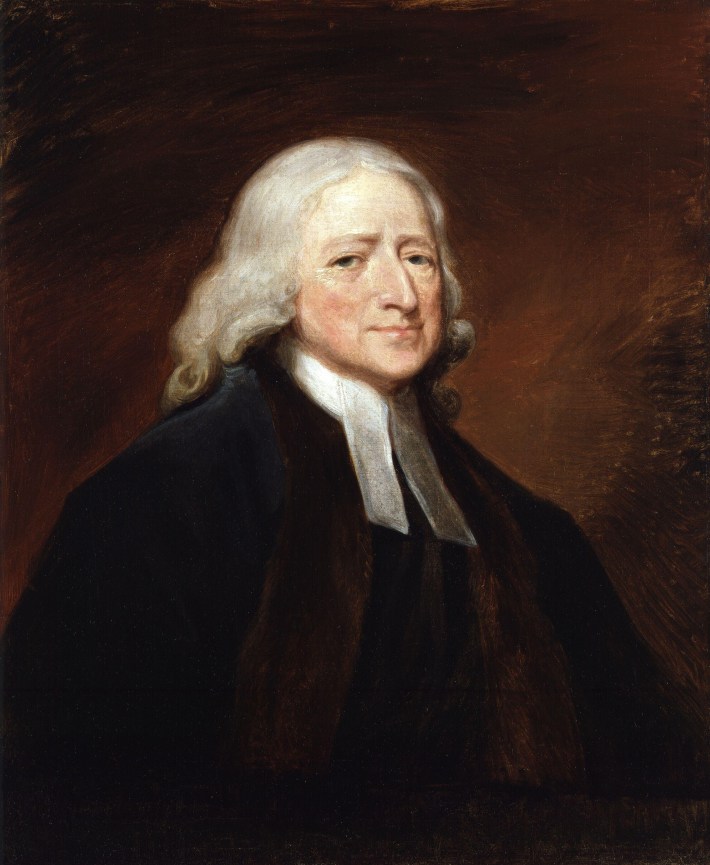
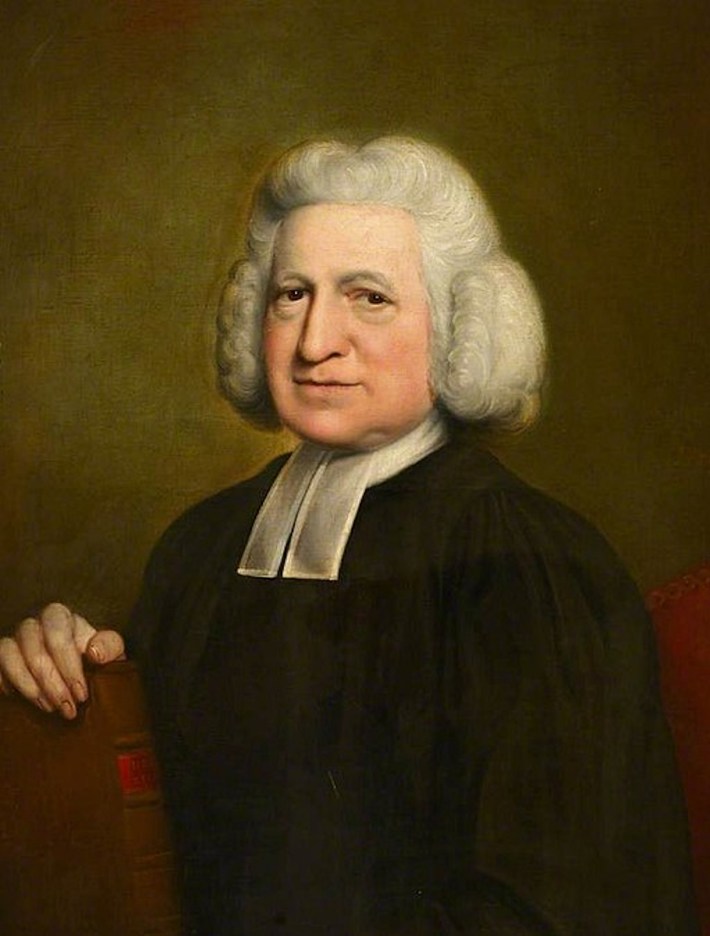
. . . The inward witness . ..this is the the proof . . . the strongest proof of Christianity.
Samuel Wesley, father of John and Charles.
In 1738, Charles was being cared for by some Moravians in Little Britain. He was overwhelmed by their humble, loving, approach and their Christian testimonies. While under the care of these Moravians, he was reading Isaiah 40 and the light of the gospel of Christ shone in his heart. He wrote these words in his journal on May 21, 1738.
I now found myself at peace with God, and rejoiced in hope of loving Christ . . . I saw that by faith I stood, by the continual support of faith . . . I went to bed still sensible of my own weakness . . . yet confident of Christ’s protection.
Charles Wesley’s Journal
He came to see that he was righteous before God as a result of faith, not works. He had a new found peace!
Three days later, his brother John, had a similar awakening in his well known experience at Aldersgate where he felt his heart was “strangely warmed.”
The day after Charles’ experience, his strength started to grow and he began to write hymns. According to some historical records, his first hymn was “And Can It Be” . . . the subject of this meditation. That notion would certainly make sense given the theme of the hymn. It is estimated that he wrote over 6000 hymns during his lifetime. Some of his most famous hymns include:
- “Christ the Lord is Risen Today”
- “Hark! The Herald Angels Sing”
- “Arise, My Soul, Arise”
- “O For a Thousand Tongues to Sing”
- “Love Divine, All Loves Excelling”
Many would conclude that he is the greatest hymn-writer of all time when both quantity and quality are considered.
The words to this great hymn are reflective of Charles’ deep feelings of his own salvation. Please meditate on them and then we will study them together.
And can it be that I should gain
An int’rest in the Savior’s blood?
Died He for me, who caused His pain?
For me, who Him to death pursued?
Amazing love! how can it be
That Thou, my God, should die for me?
Refrain:
Amazing love! how can it be
That Thou, my God, should die for me!
Tis mystery all! Th’Immortal dies!
Who can explore His strange design?
In vain the firstborn seraph tries
To sound the depths of love divine!
‘Tis mercy all! let earth adore,
Let angel minds inquire no more. [Refrain]
He left His Father’s throne above,
So free, so infinite His grace;
Emptied Himself of all but love,
And bled for Adam’s helpless race;
‘Tis mercy all, immense and free;
For, O my God, it found out me. [Refrain]
Long my imprisoned spirit lay
Fast bound in sin and nature’s night;
Thine eye diffused a quick’ning ray,
I woke, the dungeon flamed with light;
My chains fell off, my heart was free;
I rose, went forth and followed Thee. [Refrain]
No condemnation now I dread;
Jesus, and all in Him is mine!
Alive in Him, my living Head,
And clothed in righteousness divine,
Bold I approach th’eternal throne,
And claim the crown, through Christ my own. [Refrain]
Verse 1 — Joy that comes from realizing the truth
There are two major ideas in verse 1.
- First, Charles is amazed that Christ would sacrifice Himself (according to God’s plan) on a cross for him (us).
- Second, the lyrics indicate that we put Him there. Our sins caused His pain, suffering and death. This kind of sacrificial love is amazing! How can it be?
Paul (Romans 1 through Romans 3:20) goes into great detail to convince us that we are all sinners. I urge you to read that passage and reflect on the extent to which it describes us today.
In addition, Paul describes this amazing love (reflected in verse 1) in Ephesians chapter 2.
But because of his great love for us, God, who is rich in mercy,made us alive with Christ even when we were dead in transgressions—it is by grace you have been saved.
Ephesians 2: 4-5
Peter has a similar statement in 1 Peter 1:3.
Praise be to the God and Father of our Lord Jesus Christ! In his great mercy he has given us new birth into a living hope through the resurrection of Jesus Christ from the dead.
1 Peter 1:3a
How can this be?
Jesus answers the question in John 3:16: “For God so loved the world that He gave His only Son that whoever believes in Him should not perish but have everlasting life.” The first verse of our hymn expresses the incredible joy Charles discovered when he saw the truth (light) that he (Charles) is saved by the grace of God through faith in Jesus. He does not have to work his way into a right relationship with God . . . in fact he cannot!
Jesus told a very short parable which illustrates this joy that Charles found and expressed in this hymn. In Matthew chapter 13 we find these words from Jesus.
Again, the kingdom of heaven is like a merchant looking for fine pearls. When he found one of great value, he went away and sold everything he had and bought it.
Matthew 13:45
Like the merchant, Charles and John had been seeking this great treasure. When they found it they “sold off” their old ideas of how to please God (see Spurgeon’s sermon “A Great Bargain”). And, they were filled with joy and peace with God.
Verse 3 — The wonder of Jesus’ sacrifice
This verse emphasizes the great sacrifice that Jesus made to undertake His Father’s mission here on earth. He gave up being in heaven with His Father on His throne. He emptied himself of everything except his love for us . . . the children of Adam . . . and sacrificed himself because of that love. The lyrics also convey the critical concept that this is a gift from God and we do not make it happen. He finds us!
Paul describes the sacrificial attitude of Jesus . . . the suffering servant . . . in Philippians.
In your relationships with one another, have the same mindset as Christ Jesus:
Who, being in very nature God,
Philippians 2: 5-8
did not consider equality with God something to be used to his own advantage;
rather, he made himself nothing
by taking the very nature of a servant,
being made in human likeness.
And being found in appearance as a man,
he humbled himself
by becoming obedient to death—
even death on a cross!”
God makes this happen as we have already seen from the passages referred to in Verse 1 above — Ephesians 2:4 – 5, and 1 Peter 1:3.
Verse 4 — Release from the chains of sin
In analyzing this verse, some refer to Acts 16 when Paul and Silas were in chains in prison. About midnight they were singing hymns and a great earthquake occurred. Their chains fell off and all the doors were opened. However, given the experience Charles had leading up to writing this hymn, I believe the chains he refers to in this verse are not physical. They are the chains that bind us all to our sinful ways. When the light came in, his chains fell off and he was free. The light of the gospel of Jesus frees us from our bondage to sin and we have peace with God.
Paul describes this freedom in 2 Corinthians 4:6: “for God, who said, ‘let light shine out of darkness,’ has shone in our hearts to give the light of the knowledge of the glory of God in the face of Jesus Christ.”
The same God, who during creation caused light to shine in the darkness, causes the light (truth) of the knowledge of His grace given to us through faith in Jesus to shine into our hearts. That’s what happened to Charles and inspired him to give us this great hymn.
Verse 5 — The blessing of assurance
In verse 5, Charles expresses the joy and assurance of those who are “in Christ.” Those who believe in Him and are following Him are no longer under penalty for their sins. They have been declared righteous by God through the righteousness of Jesus which is imputed to them. In other words, when God looks at them in judgement, He does not see their sins . . . He sees the righteousness of Jesus which is given to all who believe. This gives the believer the confidence to approach God and receive the crown of eternal life.
Paul describes this so beautifully in the “Great 8” . . . that is the eighth chapter of Romans. He begins the chapter with the following two verses.
Therefore, there is now no condemnation for those who are in Christ Jesus, because through Christ Jesus the law of the Spirit who gives life has set you free from the law of sin and death.
Romans 8: 1-2
Final Thoughts
This great hymn is the favorite of two senior pastors I have had the pleasure to serve under, learn from and receive spiritual leadership. One of them baptized my wife and me in ocean baptism. This hymn is packed with the theology of the gospel of salvation. The immense joy, freedom and amazement that Charles Wesley felt on May 21, 1738 remain fresh today in these great lyrics.
Closing prayer
My prayer is that we all will be able to “claim the crown” by the grace of God alone, through faith alone in Christ alone!
Amen.
 Hymns for Him